New Jersey Homeowner Guide
Solar System Repair Cost in New Jersey
What repairs actually cost, how to tell a cheap monitoring fix from a real hardware failure, and how manufacturer warranties can cut the bill even when your original installer is gone. Written by the technicians who do this work every week.
What does a solar repair cost in 2026?
Most New Jersey solar repairs fall between $175 and $900, with inverter replacement being the main exception. The right starting point is almost always a diagnostic, since a system that looks completely dead is often a communication fault rather than failed hardware. Here is what the common repairs run.
| Repair type | Typical range |
|---|---|
| Diagnostic / troubleshooting visitOn-site testing to identify the fault, with written findings. Often credited toward the repair. | $175 – $350 |
| Microinverter replacement (Enphase), per unitLabor plus hardware. Lower per unit when several are replaced on the same visit. | $300 – $550 |
| Optimizer replacement (SolarEdge), per unitRequires panel lift, module-level reconfiguration, and remapping in the portal. | $275 – $500 |
| String / hybrid inverter replacementDepends on kW size, brand, warranty status, and whether a new disconnect is needed. | $1,800 – $4,500 |
| Monitoring, gateway, or comms repairEnvoy or gateway replacement, CT clamp correction, Wi-Fi or cellular reconnection. | $225 – $650 |
| Wiring, conduit, connector & rapid-shutdown repairsFailed MC4 connectors, rodent damage, corroded junctions, faulty rapid-shutdown devices. | $350 – $1,400 |
| Panel replacement (single module)Cracked glass, delamination, or hot-spotted module. Matching wattage may affect price. | $400 – $800 |
| Roof-penetration leak / flashing repairRemoving modules over the leak, resealing or replacing flashings, then reinstalling. | $450 – $1,200 |
| Full system recommissioningBringing an orphaned or long-offline system fully back online and reporting. | $400 – $900 |
Ranges are typical New Jersey residential pricing and are not a quote. Warranty coverage can reduce these numbers substantially — we check it before quoting.
What drives the price
Inverter platform
Enphase microinverter systems are repaired module by module, SolarEdge systems need optimizer-level work plus portal remapping, and string systems concentrate the cost in one larger component. Each changes both labor and part cost.
Warranty status
Most microinverters and inverters carry 10–25 year manufacturer warranties that survive your installer going out of business. When the part is covered you pay labor and shipping only, which is often the difference between a few hundred dollars and a few thousand.
Part availability and lead time
Current-generation Enphase and SolarEdge parts ship quickly. Discontinued equipment may need a compatible substitute or a partial system redesign, which raises cost.
Roof access and array height
Steep pitches, three-story homes, tile and slate roofs, and tight staging areas all add safety setup and labor time.
How many components failed
One dead microinverter is a short visit. Six failures spread across three roof planes is a different job. Bundling repairs into a single mobilization is almost always cheaper.
Missing as-builts and monitoring access
When the original installer is gone, we often have to re-document the array and regain owner access to the monitoring platform before diagnosing. That is real time, and we quote it up front.
Permits when equipment changes
Swapping an inverter for a different model is usually a permitted electrical change in New Jersey. Township fees and inspection lead times vary and are built into the quote.
Common problems and what they usually cost to fix
System completely offline, zero production
Usually a tripped AC breaker, failed inverter, or blown DC disconnect. Typical repair lands between a diagnostic-only visit and a full inverter replacement.
One string or zone is dead
Points to a failed connector, damaged home run, or a single failed optimizer. Commonly $350 – $900 once the fault is located.
Individual panels not reporting
Classic failed microinverter or optimizer. Per-unit replacement pricing applies, and multiple units on one visit cost less each.
Production lower than it used to be
Soiling, shading growth, a partially failed component, or degraded connectors. Diagnostics plus a targeted repair typically resolves it.
Breaker keeps tripping
Ground fault, moisture intrusion, or a failing inverter stage. This one should be looked at promptly — it is an electrical fault, not a nuisance.
Monitoring stopped reporting
Often just comms: a replaced router, dead gateway, or bad CT clamp. Frequently the cheapest fix on this page, and worth checking before assuming the worst.
Error codes on the inverter display or app
Arc faults, isolation faults, and grid-voltage errors each point somewhere specific. We read the fault history rather than guessing at parts.
How our repair process works
We diagnose before we replace. That keeps you from paying for parts that were never the problem, and it means the price you approve is the price you pay.
1. Remote monitoring review
Where access exists, we pull your production history and fault logs before rolling a truck, so the technician arrives knowing the likely cause.
2. On-site diagnostic
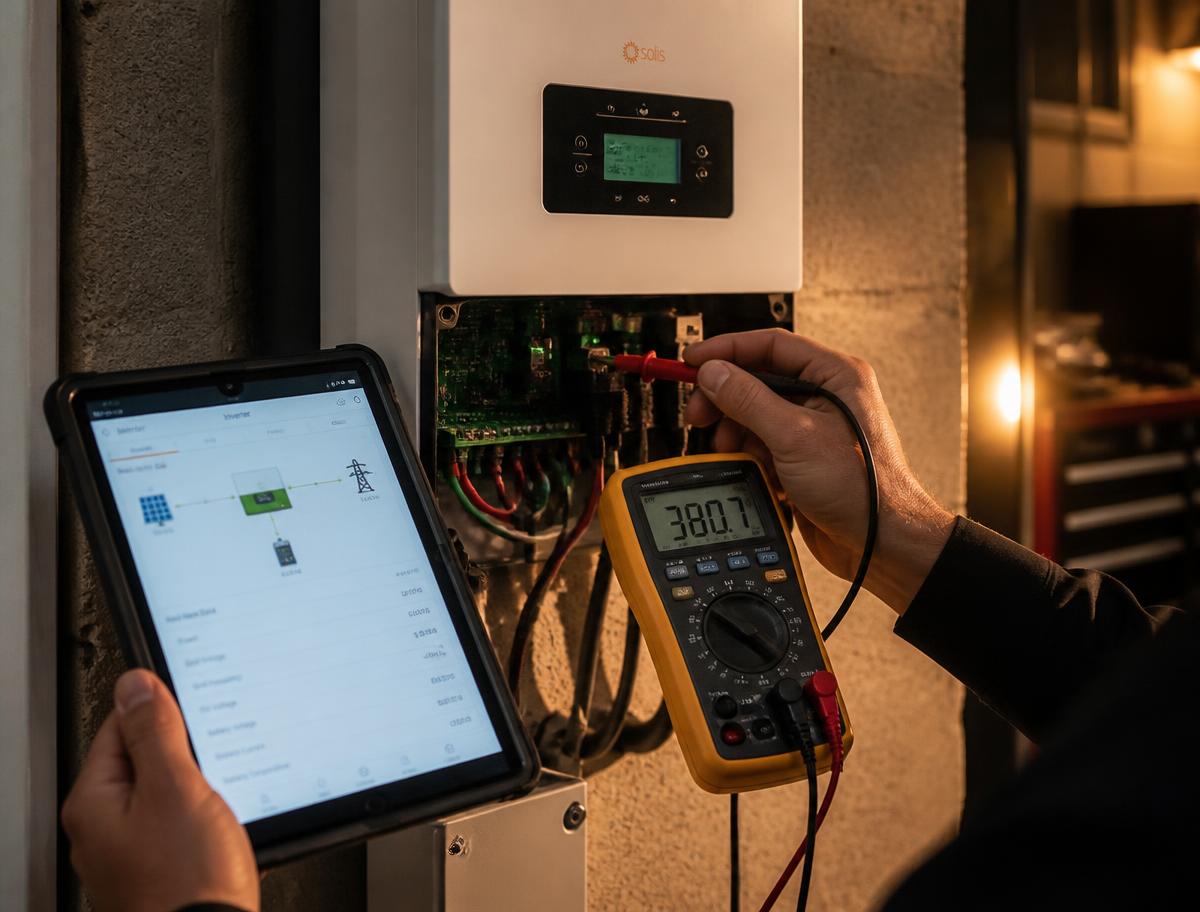
Meter and IV testing at the array, inverter, and disconnects to confirm the failure point instead of replacing parts hopefully.
3. Written findings and flat repair price
You get what failed, why, and a flat price to fix it — before any repair work starts.
4. Warranty claim and parts
If the component is still under manufacturer warranty, we file the claim and pass the part savings to you. You pay labor, not hardware.
5. Repair
Licensed and insured technicians perform the repair, including any electrical work, sealing, and hardware replacement required.
6. Recommissioning and verification
We recommission the system, confirm every microinverter or optimizer reports, and compare live production to expected output before closing the job.
New Jersey specifics
Your installer may be out of business
A large share of New Jersey homeowners bought from companies that have since closed. We service orphaned systems every week, including arrays we did not install.
Manufacturer warranties survive the installer
Enphase, SolarEdge, and panel manufacturers warrant their own hardware. If your installer is gone, the equipment warranty usually still applies — we handle the claim.
Offline time costs you SREC / SREC-II value
In New Jersey, downtime is lost production and lost incentive value. A system offline for three months is real money, which is why fast diagnostics matter.
Township permitting varies
Permits and inspection lead times are handled locally in New Jersey, so equipment swaps move faster in some municipalities than others.
Coastal corrosion and storm damage
Shore-area systems see salt corrosion at connectors and grounding points, and wind events loosen attachments. Both are common repair causes here.
Five ways to keep repair costs down
- Call at the first sign of underproduction. A single failed microinverter is cheap; a year of ignored faults spreading through connectors is not.
- Bundle repairs into one visit. Most of a small repair's cost is mobilization, so fixing three things at once costs far less than three visits.
- Check the manufacturer warranty before paying for parts. Many homeowners pay full price for hardware that was still covered.
- Keep monitoring connected. It is the cheapest diagnostic tool you own, and it turns guesswork into a targeted repair.
- If a reroof is coming, schedule repairs alongside the removal and reinstall so the panels only come off once.
Planning a roof replacement too? See our NJ solar panel removal & reinstallation cost guide.
Solar repair FAQs
How much does solar system repair cost in New Jersey?
Most New Jersey solar repairs land between $175 and $900. A diagnostic visit runs $175 to $350, a failed Enphase microinverter or SolarEdge optimizer is roughly $275 to $550 per unit installed, and a full string inverter replacement runs $1,800 to $4,500 depending on size and warranty status.
Why is my solar system not producing power?
The most common causes are a tripped AC breaker, a failed inverter or microinverter, a bad DC connector, or a monitoring/communication fault that only makes it look offline. A proper diagnostic separates a $250 comms fix from a real hardware failure.
How much is a solar diagnostic visit?
A diagnostic and troubleshooting visit is typically $175 to $350 in New Jersey, including testing and written findings. We commonly credit it toward the repair when you move forward with us.
Do you service systems installed by another company?
Yes. The majority of our repair work is on systems installed by other companies, including installers that are no longer in business.
Is my inverter still under warranty if my installer went out of business?
Very likely yes. Manufacturer warranties on microinverters and inverters run 10 to 25 years and are honored by the manufacturer, not the installer. We verify coverage and file the claim, so you pay labor rather than hardware.
How long does a solar repair take?
Most repairs are completed in a single visit once the part is on hand. Diagnostics take a few hours, microinverter and optimizer swaps are same-day, and inverter replacements are typically one day plus permit and inspection time where required.
Do you work on Enphase and SolarEdge systems?
Yes. Enphase and SolarEdge service, including microinverter and optimizer replacement, gateway repairs, and full recommissioning, is core to what we do.
System offline or underproducing? Let's diagnose it.
Honest diagnostics, warranty claims handled for you, flat written repair pricing, and a fully recommissioned system. Covering all of New Jersey.