
New Jersey Homeowner Guide
Solar Panel Removal & Reinstallation Cost in New Jersey
A straight answer on pricing, what drives the number up or down, how the job is sequenced with your roofer, and the New Jersey specifics that catch homeowners off guard. Written by the technicians who do this work every week.
What does it cost in 2026?
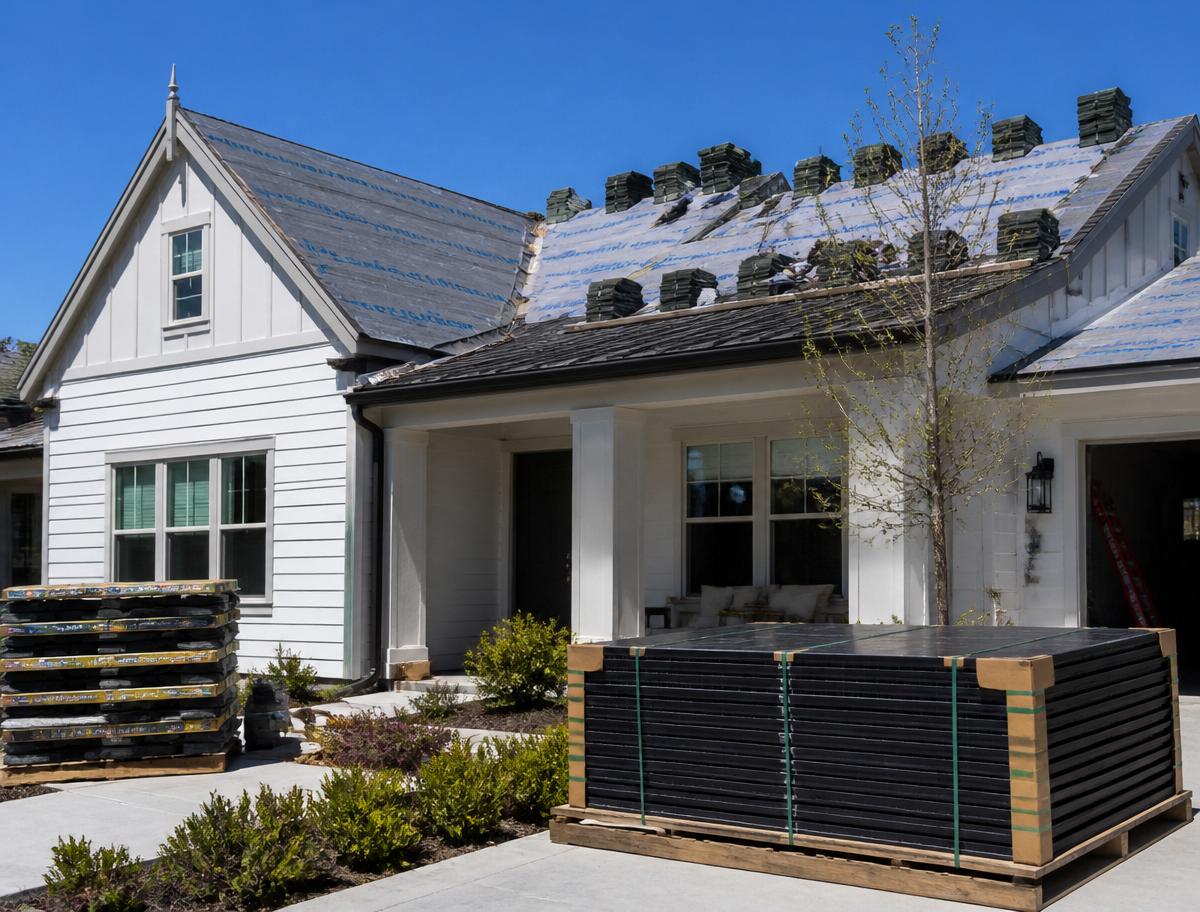
For most New Jersey homes, a full solar panel removal and reinstallation runs $2,800 to $4,800. That covers de-energizing the array, removing modules and racking, safe on-site storage while your roof is replaced, reinstallation with new flashings, and recommissioning so every panel reports again. Below is how that breaks down by system size.
| System size | Typical range |
|---|---|
| Small system (8–14 panels)Simple pitched asphalt roof, single array, ground-level access. | $1,600 – $2,900 |
| Average NJ home (15–24 panels)Most common range for a full removal and reinstall with recommissioning. | $2,800 – $4,800 |
| Large system (25–40 panels)Multiple arrays, multiple roof planes, or two-story access. | $4,500 – $7,500 |
| Complex/Steep pitchRoof pitches over 6/12, three-story townhomes, tight lots with no staging room, slate or tile roofs, or arrays split across multiple dormers and roof planes. | Custom quote |
Ranges are typical New Jersey residential pricing and are not a quote. Your exact price depends on the factors below — we give you a flat written number after reviewing the system.
What drives the price
Panel count and array layout
Labor scales with the number of modules and how many separate roof planes the array spans. Two smaller arrays cost more than one continuous array of the same size.
Roof type, pitch, and height
Steep pitches, three-story homes, tile and slate roofs, and limited staging space all add labor and safety equipment.
Inverter platform
Microinverter systems (Enphase) and DC optimizer systems (SolarEdge) require per-module handling and recommissioning. String inverters are quicker but need careful reconfiguration.
Storage and downtime
Panels must be stacked, padded, and stored safely while the roofers work. Longer roof timelines mean longer storage and a second mobilization.
Replacement parts
Flashings, mounts, and lag bolts are almost never reused. Expect new roof attachments, and occasionally new rails, MC4 connectors, or conduit.
Permits and inspections
Most New Jersey municipalities treat a removal and reinstall as a permitted electrical job with a final inspection. Permit fees vary by township.
How we coordinate with your roofer
Roofers generally will not touch a live solar array, and they should not have to. The cleanest sequence is a solar contractor on both ends of the roofing work, scheduling directly with the roofing crew.
1. Site review and quote
We confirm panel count, inverter type, mounting hardware, and roof access, then send a flat written price covering removal, storage, reinstall, and recommissioning.
2. Shutdown and safe removal
The system is shut down at the AC disconnect, modules are de-energized and labeled by string or branch, then removed with racking and flashings.
3. Roofer works on a clear deck
Your roofer gets a completely clear deck — no working around live panels, no liability for your array. We schedule directly with them so nothing sits idle.
4. Reinstall on new roof
New flashings and mounts are installed and sealed into the fresh roof, racking is re-leveled, and every module returns to its original position and orientation.
5. Commissioning and monitoring check
We recommission the system, verify every microinverter or optimizer reports, confirm production against expected output, and hand you a working monitoring app.
New Jersey specifics
Your original installer may be gone
A large number of New Jersey homeowners bought from companies that have since closed. We service systems we didn't install, including orphaned Enphase and SolarEdge arrays.
SREC / SREC-II production matters
Extended downtime means lost production and lost incentive value. Tight scheduling with your roofer keeps the system off for days, not weeks.
Township permits vary widely
New Jersey permitting is handled locally, so fees and inspection lead times differ between municipalities. We build that into the schedule up front.
Coastal and wind exposure
Shore-area homes need corrosion-appropriate hardware and correct attachment spacing on reinstall — not whatever was on the roof before.
Five ways to keep the cost down
- Bundle removal and reinstall with one contractor — two separate vendors almost always costs more and creates finger-pointing if something doesn't turn back on.
- Do it while the roof is already being replaced. Removing panels for a repair now and again at reroof time means paying mobilization twice.
- Ask whether recommissioning is included. A cheap reinstall that leaves half your microinverters offline is not a savings.
- Confirm new flashings are in the quote. Reusing old roof attachments is the most common cause of post-reroof leaks.
- Get the permit path in writing so your township's inspection doesn't stall the project.
Dealing with a fault rather than a reroof? See our NJ solar system repair cost guide.
Removal & reinstall FAQs
How much does solar panel removal and reinstallation cost in New Jersey?
Most New Jersey homeowners pay roughly $2,800 to $4,800 for a full removal and reinstall on an average 15–24 panel residential system. Smaller systems can run $1,600 to $2,900, and larger or harder-to-access arrays run $4,500 to $7,500. Panel count, roof pitch and height, inverter type, and permit fees drive the final number.
Can I just remove the panels myself to save money?
No. A rooftop array carries live DC voltage, and improper handling voids module and inverter warranties. Removal also requires correct de-energizing, labeling, and licensed electrical work to bring the system back online legally.
How long are my panels off the roof?
Removal is usually one day, and reinstallation is one to two days once roofing is complete. The total off-roof window depends on your roofer's timeline — typically a few days to a week.
Do you coordinate directly with my roofing contractor?
Yes. We schedule removal and reinstall around your roofer's dates so the deck is clear when they arrive and the array goes back up as soon as they finish.
Will my system produce the same after reinstallation?
It should. We return every module to its original position and orientation, then recommission the system and compare live production to expected output before we consider the job finished.
Do you service systems installed by another company?
Yes. Most of our removal and reinstall work is on systems installed by other companies, including installers that are no longer in business.
Getting a new roof? Get your panels handled right.
Flat written pricing, direct scheduling with your roofing crew, new flashings, and a fully recommissioned system. Covering all of New Jersey.